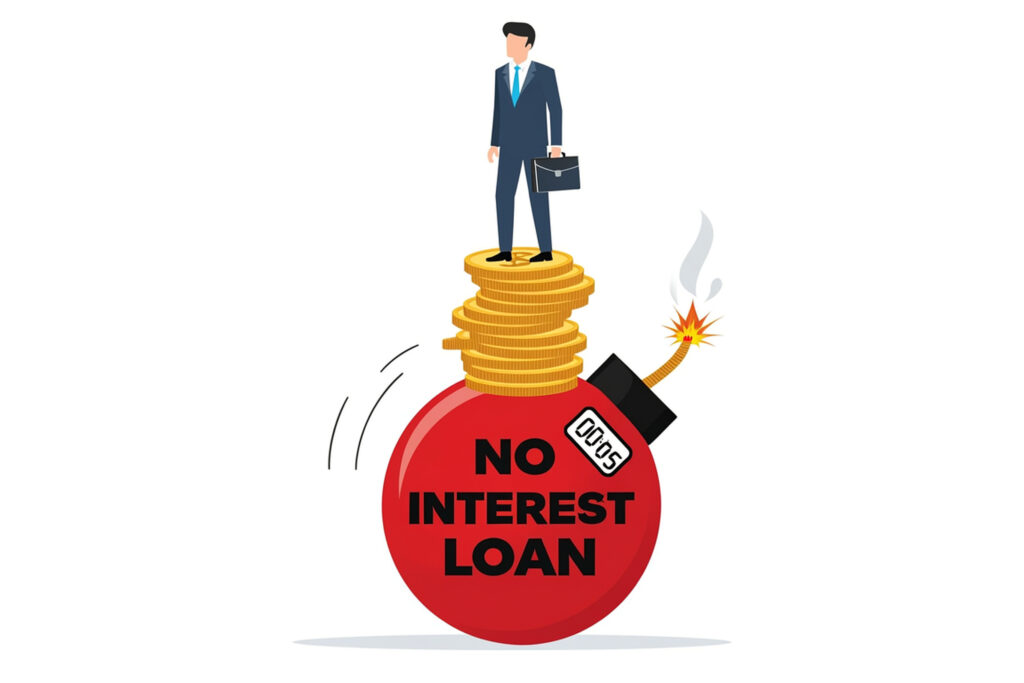
 If your business needs money, a loan claiming to be “no-interest” may be deceiving. Interest may be zero for only a limited time or may still be owed, or there may be other financial or tax consequences. Here’s what you need to know.
SBA loans
During COVID-19, the SBA made Economic Injury Disaster Loans (EIDLs) that deferred repayments for 30 months. But during this deferral period, interest continued to accrue. If you default on an EIDL loan (typically being delinquent for over 120 days), the SBA refers the debt to the Treasury’s Offset Program. This means that going forward, any federal tax refund you’re owed will automatically be applied toward the loan balance.
The SBA continues to offer disaster loans to small businesses:
- Non-COVID EIDLs. The loan is for small businesses located in a disaster area that suffers substantial economic injury. The first payment is deferred for 12 months and no interest accrues for the first 12 months. Thereafter, interest (typically not exceeding 4%) is charged, and the loan must be repaid within 30 years.
- Physical damage loans. The loan is for businesses that apply for physical disaster assistance because they’ve experienced damage to property in a declared disaster area. The same terms as the non-COVID EIDL apply, except that the 4% cap on interest is only for those that are unable to obtain credit elsewhere; otherwise, it’s 8%.
Credit card offers
If you have an outstanding balance on a credit card, you can transfer the balance to another credit card offering a 0% intro APR period. This means that during the period—typically 6 months—no interest accrues on the balance transferred (which includes interest that accrued previously on the unpaid balance). But if additional purchases are made on the new card, interest may be charged on those purchases unless there’s a specific offer for new purchases or the entire statement balance is paid in full.
Bankrate has The Complete Guide to Balance Transfers.
Loans between Companies and Owners
It’s possible for business owners to borrow from their companies, or vice versa. Often little or no interest is charged. This type of loan arrangement can result in phantom income to the lender. This happens when the interest rate charged on the loan is less than the federal Applicable Federal Rate (AFR).
Each month, the IRS sets the AFRs, and the rate at the start of the loan is what is determinative. If the loan is a demand loan and the loan is outstanding for the entire year, a blended rate applies. For 2026, the blended rate is 3.82%.
For example, if an owner borrows $50,000 from her business in a no-interest demand loan and the loan is outstanding for all of 2026, the business must report interest income for 2026 of $1,910 ($50,000 x 3.82%).
Final thought
Shakespeare said: “Neither a borrower nor a lender be”
But he didn’t run a small business in 21st century America.
Borrowing is often necessary or desirable under the circumstances. But watch carefully the terms of the loan, and particularly those governing interest payments. Don’t be fooled by a no-interest label.
Additional information about business loans can be found in this list of blogs here.