
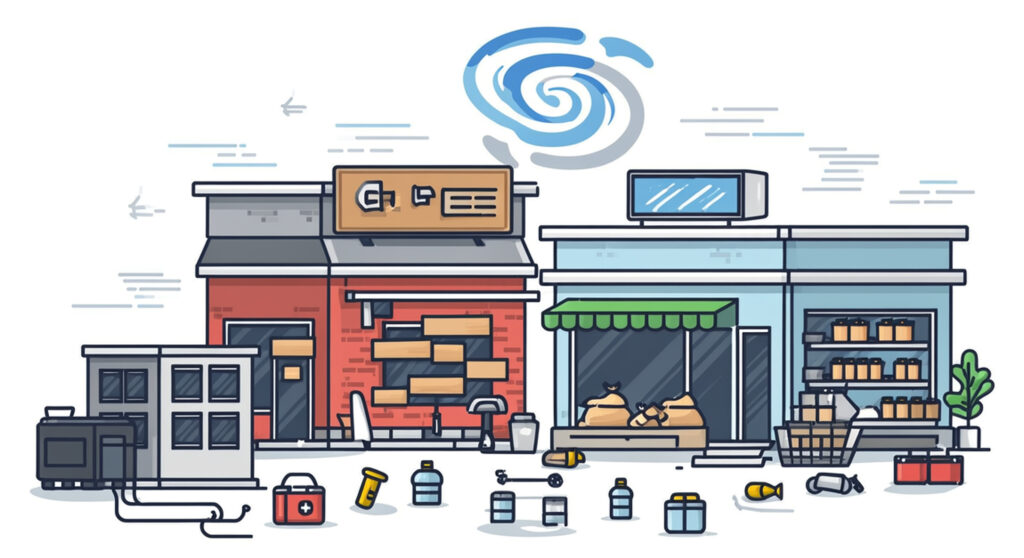
 The annual Atlantic hurricane season runs from June 1 through November 30. Hurricanes typically hit the Atlantic regions (East coast and Gulf coast of the U.S) and as well as in the Pacific. For the Atlantic regions, NOAA has predicted below normal during the 2026 hurricane season and is using AI in making these predictions. If you’re in the Northwest or Central U.S., why should you care about hurricanes; the storms won’t impact you directly? The reason: Hurricanes affect you no matter your location because:
- You may not get hurricanes, but you may experience tornados, earthquakes, wildfires, or other natural disasters. You need to be prepared and can follow similar protocols for protection from any natural disaster.
- Even if you aren’t directly affected by a hurricane, your suppliers may be. This brings disruption to your supply chain.
This blog is an update to one that ran several years ago to offer some actions you can take to protect your business in case of disaster.
Important actions to take now
Add to your contact list
Be sure you can reach all of your employees, suppliers, customers and clients, and other business contacts in case of an emergency.
Other numbers to include in your contact list:
- Small Business Administration (SBA): 800-659-2955
- FEMA: 800-621-3362
- Your insurance company and agent’s contact information
- Service people (electrician, carpenters, etc. for any needed repairs)
Talk to your insurance agent
Make sure you have the insurance protection you think you have or should have. Some events may be excluded from the policy you currently have, or you may be subject to coverage limits that do not reflect your current status (e.g., your business may have grown since you last updated the extent of your coverage). Review each of the following policies:
- Property. This coverage, which is usually part of a business owner’s policy (BOP), may provide coverage for a fire, but will it compensate you for property damage for a hurricane, tornado, etc.? Also determine whether all of your property is covered, what the coverage cap is, and whether you want to make changes. And while you’re at it, check whether you’re covered by events other than from nature, such as riots and civil unrest.
- Business continuation coverage. If you want to have cash to pay your bills when your doors are closed, you may need this coverage to pay your employees, your rent, and other fixed costs.
- Flood insurance. Your BOP likely doesn’t cover flood damage. You must have this coverage if you are in a flood zone and have a mortgage from a federally regulated or insured lender. You can’t buy this coverage through FEMA, but commercial insurers offer it through the National Flood Insurance Program (NFIP). For example, The Hartford offers commercial flood insurance coverage.
Review your disaster preparedness plan
It’s advisable to have a written plan to follow in case of emergency. Consider your onsite and remote workforce.
There are numerous resources you can use to craft your plan, including:
- FEMA
- IRS
- National Weather Service
- SBA
- SCORE (an old blog that’s still helpful)
- U.S. Chamber of Commerce (an old guide that’s also still helpful)
Expand your supply chain
Today, many commodities are in short supply and prices for available materials are increasing in many cases. The suppliers you’ve been dealing with may be unable to meet your needs. And if disaster strikes, you may be even more challenged to obtain your needed items at affordable prices.
Be sure you understand supply chain management so you can always have what your company needs. Learn more about this from NC State University.
Keep your vehicle in ready-to-go condition
You may need to evacuate, so be sure vehicle fuel tanks are at least halfway full throughout hurricane season to avoid pre- and post-storm shortages. EV owners should maintain 50 to 80% battery charge.
Closing thoughts
“A prudent person foresees danger ahead and takes precautions. The simpleton goes blindly on and suffers the consequences.” Proverbs 27:12
Be that prudent person and not the simpleton and, as Scouting America (formerly Boy Scouts of America) say: “Be prepared.”
Additional information on this topic can be found in this list of blogs.