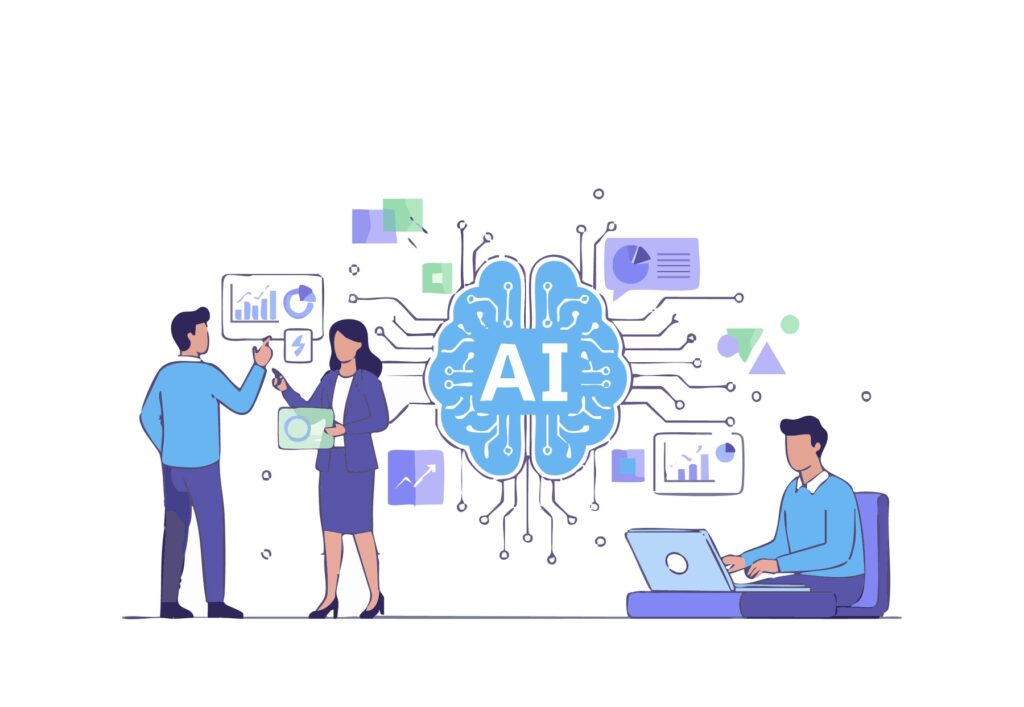
 Artificial intelligence—AI—is a topic that continues to dominate the news. Last year the U.S. Chamber of Commerce found that the majority of small businesses (60%) are already using some AI. Despite concerns that AI would lead to job losses, 82% of small businesses using AI increased their workforce in 2025. And 80% said AI helped them cope with inflation, supply chain disruption, and access to capital. Looking ahead, how will AI impact your business?
Ways AI will impact your business
Use built-in tools
Small business owners may complain about the need to learn about new technologies and to train employees. But it seems that none of this may be necessary (or at least minimized). Why? Many existing programs/apps are incorporating AI and can be accessed by a simple “Yes.” For example, Microsoft’s AI “Copilot” is imbedded in its programs…Word, Excel, PowerPoint, Outlook, and more. Other examples:
- QuickBooks: automatic categorizing of expenses
- Outlook and Gmail: AI-drafted responses (it’s an option)
- Word and Google Docs: Enable AI to create documents from your bullet points
- Zoom and Teams: summarize meetings
Watch laws related to employment
Today, AI is being used in automated decision systems (ADS) to make determinations about hiring, promotion, discipline, and other employment-related matters. ADS can be a time (and money) saver for employers, but has been criticized as often being discriminatory.
Federal development. In December 2025, the No Robot Bosses Act was reintroduced in Congress. The bill calls for human oversight of ADS decisions, transparency (disclosing to applicants and employees that ADS is being used), and testing to be sure that ADS isn’t bias (discriminatory). It also calls for the creation of a Technology and Worker Protection Division at the Department of Labor to regulate the use of automated decision systems in the workplace. Who knows what will happen in Congress to this measure in 2026.
State developments. A bill by the same title in California was vetoed by the governor last fall. But Illinois’ law and Texas’s law, both effective January 1, 2026, prohibit the discriminatory use of AI in employment matters. Colorado has a similar law effective June 30, 2026. And other states may consider similar measures in 2026, so monitor developments.
Pay attention to cybersecurity
While AI may be a good thing for small businesses, there’s a real downside to consider: the need for great cybersecurity. Be sure you address this consider by using multifactor authorization (MFA) on email, remote access, and apps. Educate employees about accessing outside sites and importing outside information. Explore cyber insurance. And monitor throughout the year how your cybersecurity policies are working.
Final thought
“Artificial Intelligence, deep learning, machine learning — whatever you’re doing if you don’t understand it — learn it. Because otherwise you’re going to be a dinosaur within 3 years.” ~ Mark Cuban
With the year ahead of you, think now about ways to deploy AI, how it’s going to impact your staff and your budget, and get going!
Find more information concerning AI and your business in this list of blogs here.