 Each year, April 15th—Tax Day—is a reminder that part of the cost of doing business is paying taxes on profits. The federal government, and perhaps state and local governments too, are effectively silent partners in your enterprise.
To handle this obligation, small business owners need to be familiar with tax rules (even if they use a paid professional), and this requires an understanding of tax jargon. For many, this is the equivalent of a foreign language.
That’s what motivated me to write a book to help small business owners essentially break the code.
New eBook
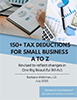
The Small Business Owner’s Guide to Tax Terms, Acronyms, and More is my new e-book. It’s a reference guide to help you understand the language of taxes. It includes terms, acronyms, and initialisms you may encounter so that you make more informed business decisions and converse more effectively with your tax professional and other advisers. In thinking of how you would learn from, use, and adopt this information, this book has been created to help you manage your small business in the world of tax, laws, and government compliance.
Overview of the book
The book contains 5 parts:
- Tax terms
- Tax acronyms
- Acronyms of laws affecting taxes
- Acronyms of federal departments, agencies, organizations, and programs
- Tax definitions of small business
Sample from the book
Each tax term contains a definition, followed by an example, details, or a resource. Because it is an e-book, you can easily use included links to access more information. Here’s an example:
accountable plan. A reimbursement arrangement for employee-paid business expenses, such as traveling costs, meeting certain conditions that allow for tax-free treatment for the employee and exemption from employment taxes for the employee and employer.
Details: The 3 conditions are spelled out in IRS Publication 463: 1. There must be a business connection to the expense incurred. 2. The employee must account to the employer for the expense within a reasonable time (usually 60 days). 3. The employee must return any excess reimbursement or allowance within a reasonable period (usually 120 days).
Final thought
I don’t think James Patterson or any of the other best-selling authors need to fear competition from my new book. I hope that small business owners will benefit from it.
Additionally, related to this topic, you’ll find more information and resources in this list of blogs here.