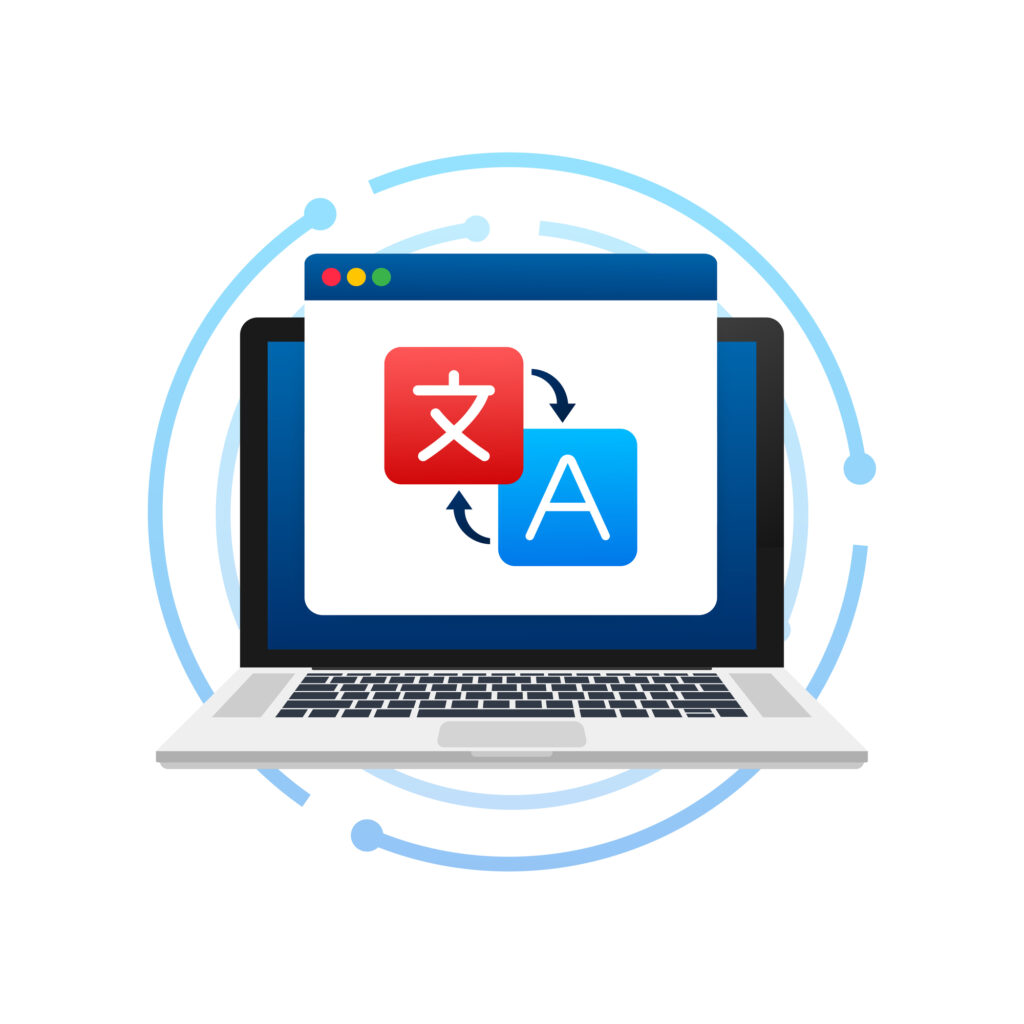
 In today’s interconnected marketplace, language barriers are no longer insurmountable obstacles for small businesses with global ambitions. The AI translation market is experiencing explosive growth, expanding from $1.8 billion in 2023 to a projected $13.5 billion by 2033, representing a compound annual growth rate (CAGR) of 22.3%. This technological revolution is democratizing global expansion, making it accessible to businesses of all sizes.
For small businesses, the stakes are high and the opportunities are immense. According to recent data, 68% of small businesses in the U.S. now use AI regularly, up from 48% in mid-2024, with translation and localization emerging as critical applications. Even more compelling, 96% of B2B leaders report positive ROI from localization efforts, with 65% seeing at least a 3x return on their investment.
As one Reddit user aptly noted in a discussion about international business expansion, “Reddit’s Brazil growth alone saw nearly 80% increase in daily active users driven by machine translation.” This real-world success story demonstrates how AI translation can unlock entirely new markets for businesses willing to embrace the technology.
How Can AI Translation Help Small Businesses Expand Internationally?
AI translation serves as the foundational technology enabling small businesses to communicate effectively across linguistic boundaries. Unlike traditional translation methods that can cost $0.22 per word and take weeks to complete, machine translation averages just $0.10 per word while delivering results in seconds. This dramatic reduction in both cost and time creates previously impossible opportunities for resource-constrained small businesses.
The technology leverages neural machine translation (NMT) and advanced natural language processing to understand context, cultural nuances, and industry-specific terminology. Modern AI translation platforms aggregate multiple AI engines, including Google, DeepL, Microsoft, and Claude, to deliver accuracy that approaches human-level quality for many business applications.
What Is the Best AI Translation Tool for Small Business?
While numerous AI translation tools exist, small businesses need solutions that balance accuracy, affordability, and ease of use. For example, MachineTranslation.com is an AI translation platform revolutionized how businesses approach translation through its innovative SMART feature by using consensus translation from multiple AI engines.
7 Smart Ways to Leverage AI Translation for Global Growth
1. Translate Your Website for International Markets
Your website is often the first touchpoint for international customers. Machine translation software can reduce translation workflows by up to 66% through automation, enabling you to launch multilingual websites rapidly.
Start by translating your highest-traffic pages, homepage, product pages, and key landing pages. Tools like Weglot and Smartcat offer seamless integration with content management systems, automatically detecting and translating new content as you add it. The key is maintaining a consistent brand voice across languages while adapting to local preferences.
Consider Reddit’s success story: after implementing machine translation across their platform, they quadrupled their daily active users in translated markets and saw an 82% jump in international revenue. Their Brazil market alone experienced nearly 80% growth in Daily Active Unique users, demonstrating the transformative power of removing language barriers.
2. Create Multilingual Product Documentation
Product descriptions, user manuals, and technical documentation are critical for international sales. AI translation enables you to maintain comprehensive documentation in multiple languages without hiring specialized technical translators for each language pair. Find a product that can do it all. For example, MachineTranslation.com supports 270+ languages and preserves document formatting, so that PDFs, Word documents, and spreadsheets maintain their professional appearance across all languages.
For small businesses in regulated industries, the platform’s optional human verification layer provides an additional quality checkpoint for mission-critical content, combining AI efficiency with human expertise where it matters most.
3. Expand Your E-Commerce Reach
The global e-commerce market offers unprecedented opportunities for small businesses. According to Mordor Intelligence, the IT and Telecom sector absorbed 26.45% of the machine translation market in 2024, with retail and e-commerce maintaining sizeable throughput for translating price lists, reviews, and dynamic advertisements.
Implement AI translation to:
- Translate product listings across multiple marketplaces
- Localize product reviews to build trust with international customers (learn more about The Impact of Customer Reviews on Small Businesses)
- Create region-specific marketing campaigns
- Translate customer service responses in real-time
4. Provide Multilingual Customer Support
Customer expectations have evolved—buyers expect support in their native language. 75% of companies surveyed in 2024 planned to use Large Language Models in their organizations by 2025, with customer service leading adoption.
AI translation enables small businesses to:
- Respond to customer inquiries in their preferred language
- Translate FAQ sections and knowledge bases automatically
- Provide real-time chat translation for customer service teams
- Scale support operations globally without proportional staff increases
By leveraging platforms that integrate with existing customer service tools, you can maintain response quality while dramatically expanding your accessible market. The key is combining AI translation with human oversight for complex or sensitive customer interactions.
5. Localize Your Marketing Content
Translation isn’t merely about converting words; it’s about adapting your message to resonate with local cultures. Shopify research shows that localized personalization leads to 20% higher customer satisfaction.
Smart localization strategies include:
- Adapting humor, idioms, and cultural references
- Adjusting date formats, measurement units, and currency displays
- Considering local holidays, traditions, and cultural sensitivities
- Testing translated content with native speakers from target markets (see 4 Ways to Personalize the Online Shopping Experience for Customers for more insights)
6. Create Multilingual Content Marketing
Content marketing drives organic traffic and establishes thought leadership. Translating blog posts, whiteboards, case studies, and social media content opens these channels to global audiences.
For small business content teams, this means you can:
- Translate blog posts at scale without compromising quality
- Adapt social media campaigns for regional audiences
- Create localized lead magnets and downloadable resources
- Produce multilingual video subtitles and transcripts
7. Enter New Markets Through Strategic Translation
Geographic expansion requires careful market research and strategic planning. AI translation accelerates this process by enabling you to test markets quickly and affordably before committing significant resources.
According to the G-P 2024 Global Growth report, 97% of executives agree establishing a market presence in multiple countries is essential for remaining competitive. However, traditional market entry strategies are expensive and time-consuming for small businesses.
AI translation enables lean market testing:
- Translate landing pages for specific geographic markets
- Create localized paid advertising campaigns
- Test product-market fit through translated surveys and focus groups
- Build preliminary partnerships with translated business materials
How Much Does AI Translation Really Cost?
Cost concerns often prevent small businesses from pursuing global expansion. Traditional human translation services range from $0.15 to $0.30+ per word, making comprehensive website translation prohibitively expensive for resource-constrained businesses.
AI translation platforms have transformed this equation. MachineTranslation.com offers a free tier with 100,000 words per month, enough to translate substantial business content without any upfront investment. For small businesses looking to scale their operations, this represents a game-changing opportunity to expand globally without the traditional overhead costs. For context, 100,000 words could translate:
- An entire small business website (20-30 pages)
- Several months of blog content
- Complete product catalogs
- Comprehensive customer support documentation
Paid tiers add enhanced features like increased word limits, advanced formatting preservation, and priority processing, but the free tier provides more than adequate capacity for small businesses testing international markets.
What Are the Limitations of AI Translation?
While AI translation has advanced dramatically, small businesses must understand its limitations to use it effectively. AI translation works best for:
- Straightforward business content
- Technical documentation
- E-commerce listings
- Customer service communications
- General marketing materials
However, certain content types still benefit from human expertise:
- Legal contracts requiring precise terminology
- Marketing content with sophisticated wordplay or cultural nuances
- Medical or pharmaceutical information
- Financial regulatory documents
- Content where brand voice is paramount
The optimal approach combines AI efficiency with human judgment. Use AI translation for initial drafts and high-volume content, then apply human review for mission-critical materials. This hybrid model delivers the cost benefits of AI while maintaining the quality standards necessary for professional business operations.
Best Practices for Implementing AI Translation
To maximize the value of AI translation for global expansion:
Start with a clear strategy: Identify target markets based on customer demand, competitive analysis, and market size. Don’t attempt to translate into 50 languages simultaneously, begin with 2-3 priority markets and expand gradually. Consider how local SEO strategies will complement your translated content in each new market.
Maintain terminology consistency: Create glossaries of key business terms, product names, and brand-specific language. Most AI translation platforms allow you to upload custom glossaries that ensure consistent translation of critical terminology.
Invest in quality at key touchpoints: While AI translation works well for most content, allocate budget for human review of customer-facing materials, legal documents, and brand-defining content.
Test and iterate: Monitor analytics for translated content to understand what resonates with international audiences. A/B test different translations and localization approaches to optimize conversion rates.
Leverage consensus translation: When accuracy matters and you lack native language expertise, tools such as MachineTranslation.com that aggregate multiple AI engines and provide consensus-based recommendations offer significantly higher confidence than single-engine solutions. As you expand into international markets, don’t forget to implement smart payment strategies that accommodate global customers.
The Future of AI Translation for Small Business
The trajectory is clear: AI translation will continue improving while becoming more accessible…and more widely used. Small businesses that adopt early will capture disproportionate advantages.
Emerging capabilities on the horizon include:
- Real-time video translation with synchronized lip movements
- Context-aware translation that understands your full business ecosystem
- Improved handling of regional dialects and low-resource languages
- Integration with augmented reality for visual translation
- Advanced personalization based on individual customer preferences
For small businesses, the question is no longer whether to embrace AI translation, but how quickly you can leverage it to outpace competitors who remain confined to single-language markets.
Taking Action: Your Global Expansion Roadmap
Ready to leverage AI translation for international growth? Follow this pragmatic roadmap:
- Audit your current content: Identify which materials need translation to enter target markets
- Select priority languages: Research where your products/services have natural demand
- Start with high-impact pages: Translate homepage, key product pages, and contact information
- Implement consensus-based translation: Use tools like MachineTranslation.com’s SMART feature to ensure accuracy without manual comparison
- Monitor and optimize: Track international traffic, conversion rates, and customer feedback
- Scale gradually: Add languages and content as you validate market demand
The democratization of global commerce through AI translation represents one of the most significant opportunities for small business growth in the modern era. Companies that act decisively while competitors hesitate will establish market positions that become increasingly difficult to challenge.