

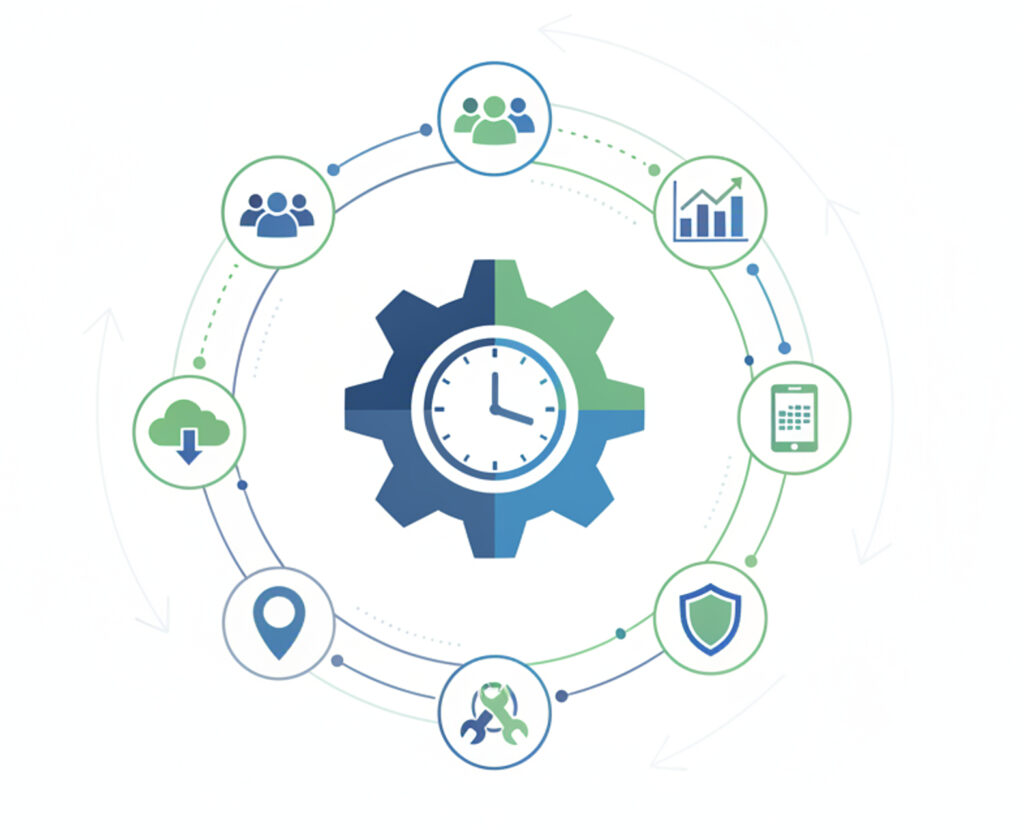
 Workforce planning protects labor budgets, service coverage, compliance records, and employee confidence. Effective systems help leaders anticipate demand in advance. They also give staff clearer schedules, cleaner time records, and fewer avoidable surprises. Strong platforms connect forecasting, scheduling, attendance, communication, and reporting into one dependable operating rhythm.
Accurate Labor Forecasting
Forecasting should begin with demand signals, not habit or last month’s roster. Leaders need workload patterns by site, role, skill, shift, and service need. The right workforce management solutions for enterprises combine historical volume, current capacity, absence trends, and expected demand, so staffing plans reflect operational pressures rather than fixed assumptions.
Smart Scheduling
Good scheduling protects coverage without exhausting people. Managers need quick access to availability, qualifications, leave requests, and overtime limits. Staff need enough notice to plan family, travel, rest, and medical needs. A strong schedule reduces missed shifts, last-minute calls, and employee burnout. It also keeps service levels stable when demand rises or staffing changes. And it can be sure to satisfy predictive scheduling laws, which require certain employers to provide employees with schedules in advance.
Accurate Time-Tracking
Time data must reflect actual work. Sign-in entries, breaks, corrections, approvals, and exceptions should be easy to audit. Accurate records protect payroll integrity and reduce disputes. And they provide documentation for minimum wage and overtime rules under the federal Fair Labor Standards Act (FSLA) and comparable state laws. Early visibility matters because missed punches, late starts, or irregular breaks can distort labor costs. Managers can address small issues before they affect pay, morale, or compliance evidence.
Compliance Support
Work rules differ by jurisdiction, union agreement, contract type, and internal policy. Effective software applies those rules during scheduling, time capture, and manager approval. Alerts should identify missed breaks, overtime exposure, rest-period conflicts, and improper assignments. This prevents minor administrative errors from becoming wage claims, audit findings, or employee complaints. Software can ensure that FSLA recordkeeping requirements are satisfied.
Clear Analytics
Reports should help leaders interpret operational health, not just export numbers. They must show labor cost, utilization, attendance, productivity, open shifts, and coverage gaps. Trend data is especially important because a single poor week may mask a growing staffing problem. Clear analytics help teams adjust budgets, staffing models, and workload distribution with evidence.
Useful Metrics
Certain helpful measures to track include forecast accuracy, overtime hours, absence rates, schedule adherence, labor cost by team, and open shift-fill time. These indicators show where plans match demand and where controls need attention.
Employee Self-Service
Employee access is a practical measure of system quality. Staff should view schedules, request leave, update availability, check attendance records, and confirm shift changes without waiting for manual help. Self-service reduces interruptions from managers and reduces confusion. More importantly, it provides people with reliable information about their work lives, which builds trust and reduces avoidable stress.
Tools for Efficient Communication
Communication belongs close to the schedule. Teams need timely updates about shift changes, urgent coverage needs, location requirements, and policy reminders. Messages should reach the intended group without distracting others. Clear communication prevents staffing details from being scattered across texts, email chains, or informal conversations. It also helps managers document decisions when coverage changes quickly.
Integration Readiness
A workforce platform should be easy to integrate with the systems used by payroll, human resources, finance, and project management teams. Disconnected tools create duplicate entries, mismatched records, and delayed corrections. Strong integration keeps labor data consistent from schedule creation through payroll processing. It also supports growth because added locations, teams, or service lines do not require extra manual reconciliation.
Managerial Task Tracker
Managers carry much of the daily workload. Software should make approvals, schedule edits, exception reviews, and reports straightforward. If screens feel confusing, users delay entries or create workarounds. Practical design improves adoption because supervisors can complete routine actions under real operational pressure. System value depends on steady, accurate use across departments, shifts, and locations.
Fairness and Transparency
Workforce management affects culture as much as cost. Scheduling rules, time records, overtime patterns, and attendance expectations should be clear enough to support fair treatment. Transparent systems reduce suspicion around assignments, leave approvals, and shift distribution. When leaders explain decisions with accurate records, employees can see how work is planned, measured, and corrected.
Conclusion
Effective workforce management systems bring structure to decisions that affect people every day. The strongest platforms improve forecasting, scheduling, time accuracy, compliance control, communication, and reporting without adding unnecessary friction. Each attribute matters because staffing pressure affects budgets, service quality, and employee well-being simultaneously. When these capabilities work together, organizations make faster, fairer, and better-documented workforce decisions.
Additionally, you’ll find information concerning staff management in this list of blogs here.